Storage
How to store sealed Pokémon: light, humidity, heat and seal
5 min readUpdated on 2 November 2026
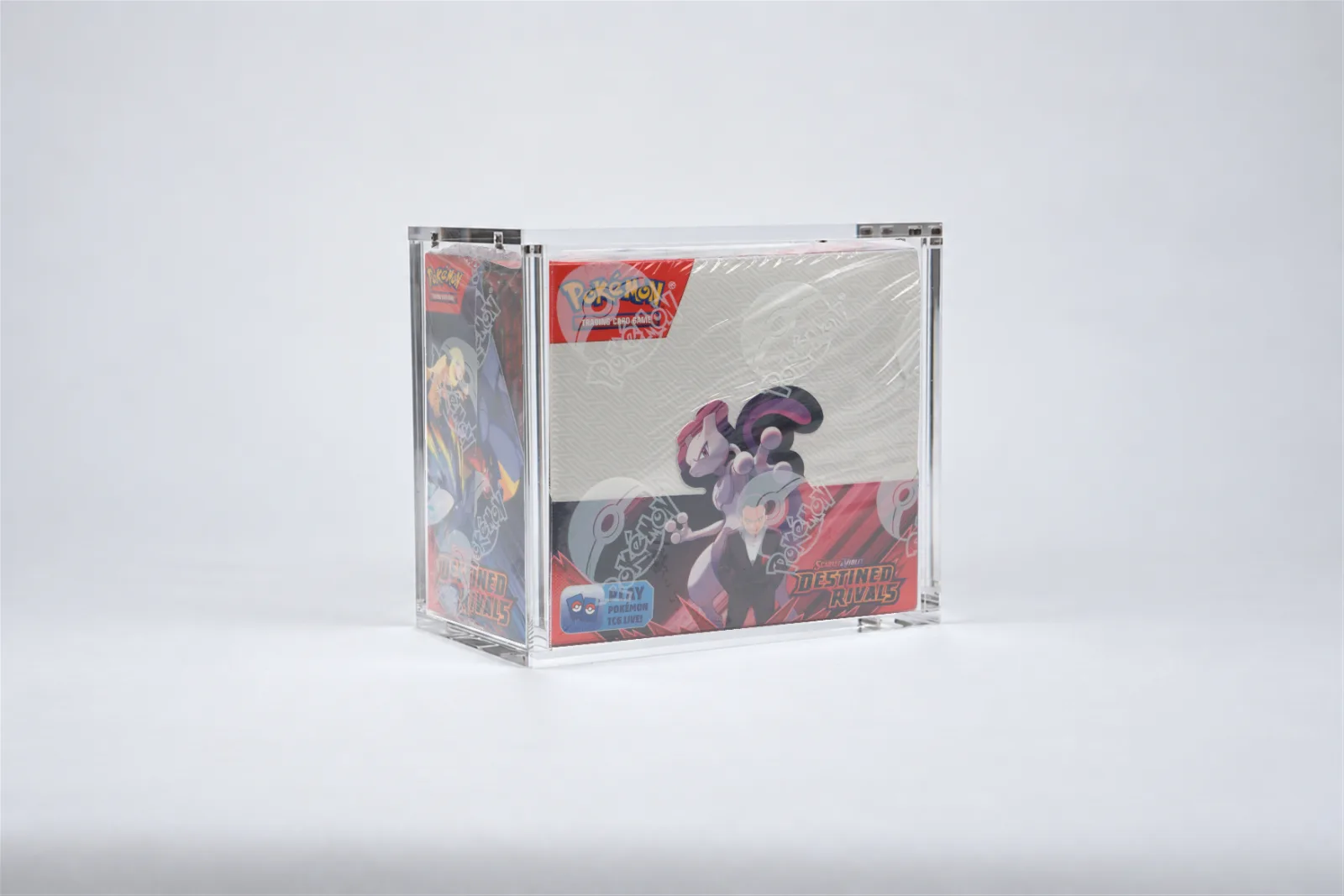
Sealed product rarely gets ruined in one go. It happens slowly: a few summers in the loft, a cupboard against a cold outside wall, a shelf that catches the afternoon sun. That's why most of this guide is about where your sealed product lives.
The best way to store sealed Pokémon is in a closed cupboard in a living room or bedroom, out of the light, at normal room temperature and away from outside walls. Keep it out of the loft, the basement, the shed and the car. Leave the seal on, and don't put heavy collectibles on top of light ones.
For paper and card in rooms that people also live or work in, the US conservation centre NEDCC recommends 68 °F, give or take 4 °F (roughly 18 to 22 °C), with relative humidity between 30 and 60%. That's a range you can work with at home. It tends to go wrong in the spots where a collectible ends up simply because there was room:
| Spot | What goes wrong |
|---|---|
| Loft or attic | very hot in summer, which also makes it very dry |
| Basement, or the ground floor if there's no basement | often damp |
| Cupboard or shelf against an outside wall | damp as soon as it's cold outside |
| Next to a radiator | warm and dry |
| Windowsill or a sunny shelf | light, and heat |
| Shed | can get damp in spring and autumn |
| Car | in summer, far hotter than the air outside |
That table is drawn from the Canadian Conservation Institute (CCI) pages on relative humidity and temperature. They're written for museums, but a collection room isn't so different.
Light: dark is best
Light fades the printing ink on sealed product, and UV makes the paper brittle faster on top of that (NEDCC). Faded colour doesn't come back, so any collectible you're not showing off is better off in a closed cupboard or a storage tub. Why that is, and how quickly it happens, is covered in Do acrylic cases protect Pokémon from UV and fading?
Humidity: between 30 and 60%
Card breathes. It takes up moisture when the air is humid and swells, then gives it back and shrinks when the air dries out. When that happens fast, NEDCC says, paper distorts, and a collectible with a bulging side or a wavy lid won't flatten out again.
Damp is the bigger danger, because that's when mould grows, and mould stains and breaks down paper. The CCI gives roughly 100 days before mould is visible at 70% humidity, and just two days at 90%, at around 25 °C. Very dry air is less of a worry, though paper does lose flexibility and break more easily (NEDCC).
You can't really feel humidity, so put a hygrometer in the cupboard. Check it in winter as well: that's when the air near outside walls cools down and gets damper.
Heat: room temperature
Warmth speeds up the ageing of paper. The CCI rule of thumb is that every 5 °C cooler doubles the lifetime of materials like it, which is why a collectible that spends its summers in a hot loft ages faster than one in the living room.
Direct sunlight is the worst of it. A dark surface facing the sun can quickly get 40 °C hotter than the surrounding air, reaching 75 °C on a warm summer day, and hotter still behind glass, as in a display cabinet. Acrylic has its limits too: many common plastics, acrylic included, start to deform somewhere between 65 and 90 °C.
The car isn't a safe stopover. After a card show, a collectible ends up on the back seat in the sun before you know it.
The seal: leave it on
The seal belongs to a sealed product. Take it off and it isn't sealed any more, and putting a new seal around it doesn't change that.
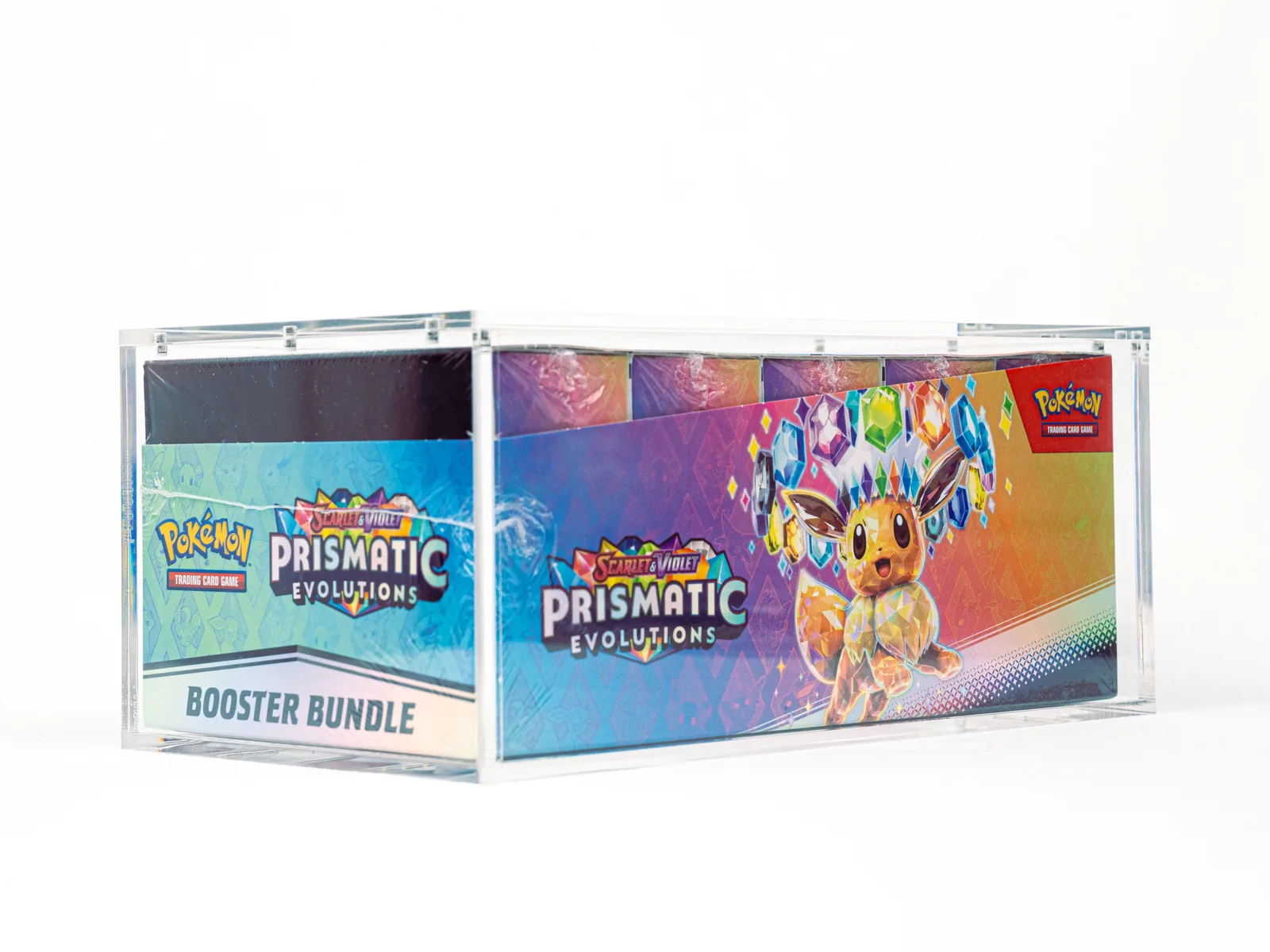
- Don't stick anything on the seal. Price stickers and tape are hard to get off later without tearing it.
- Leave a small tear alone. Tape on the seal does more damage than the tear.
- A seal is made to shrink when heated. We don't know at what temperature it shrinks further, and we won't guess. It's one more reason to keep sealed product away from the loft, the sun and the car.
In a storage tub
A closed plastic tub keeps out dust and insects, and an opaque one keeps out light too. A tub that closes tightly also evens out swings in humidity; the CCI calls moisture-proof packaging beneficial for "almost all collections in almost all situations".
The catch is that moisture already inside stays inside. Collectibles packed on a humid day stay damp far longer than they would in the open. And a tub against a cold wall, or half in the sun, gets damp on its cold side, sometimes to the point of condensation. Pack on a dry day, make sure the collectibles are dry, and keep the tub off cold floors and away from outside walls and sunshine.
When you stack, put the heaviest collectibles at the bottom, and never put anything heavy on a loose ETB or Booster Bundle.
On a shelf
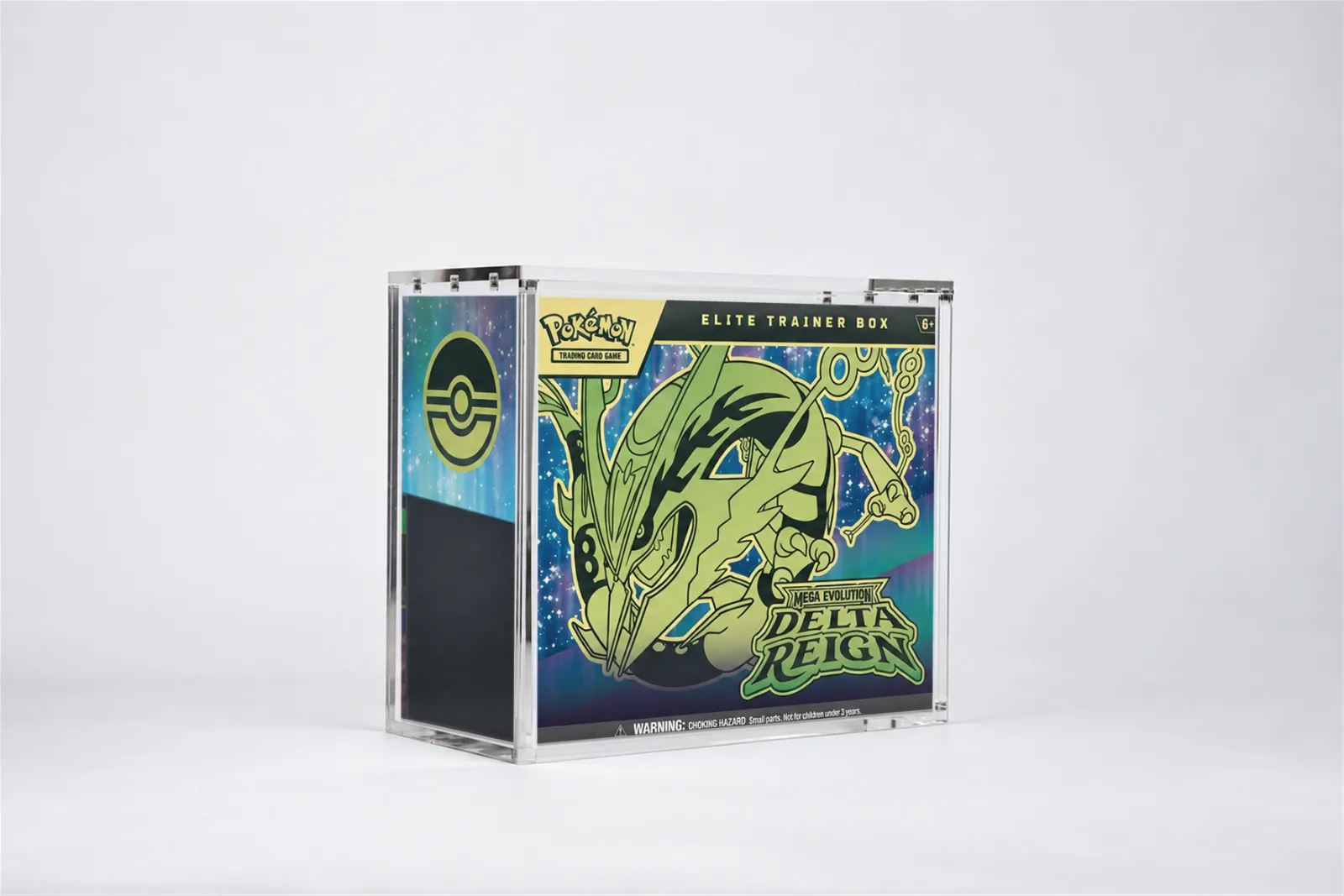
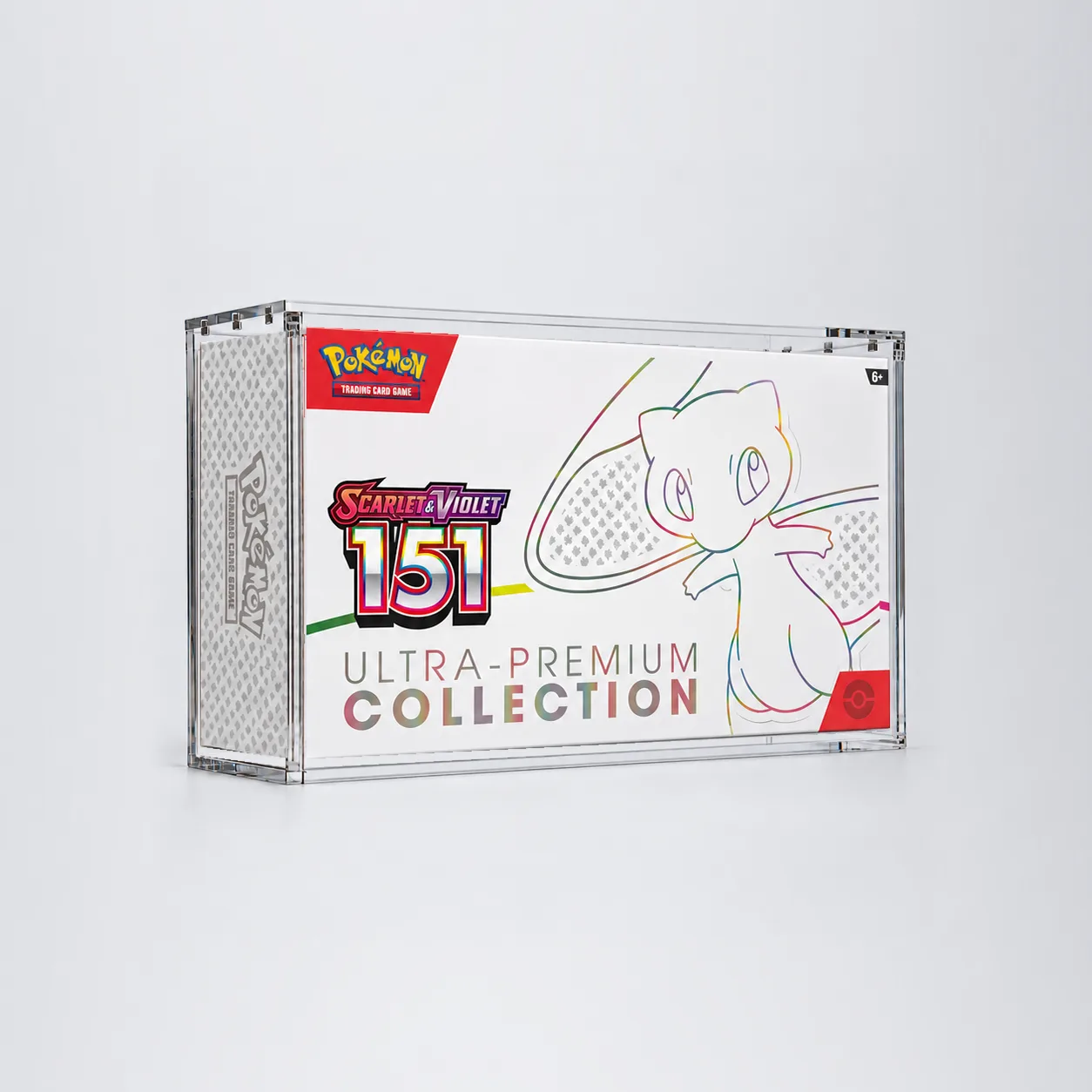
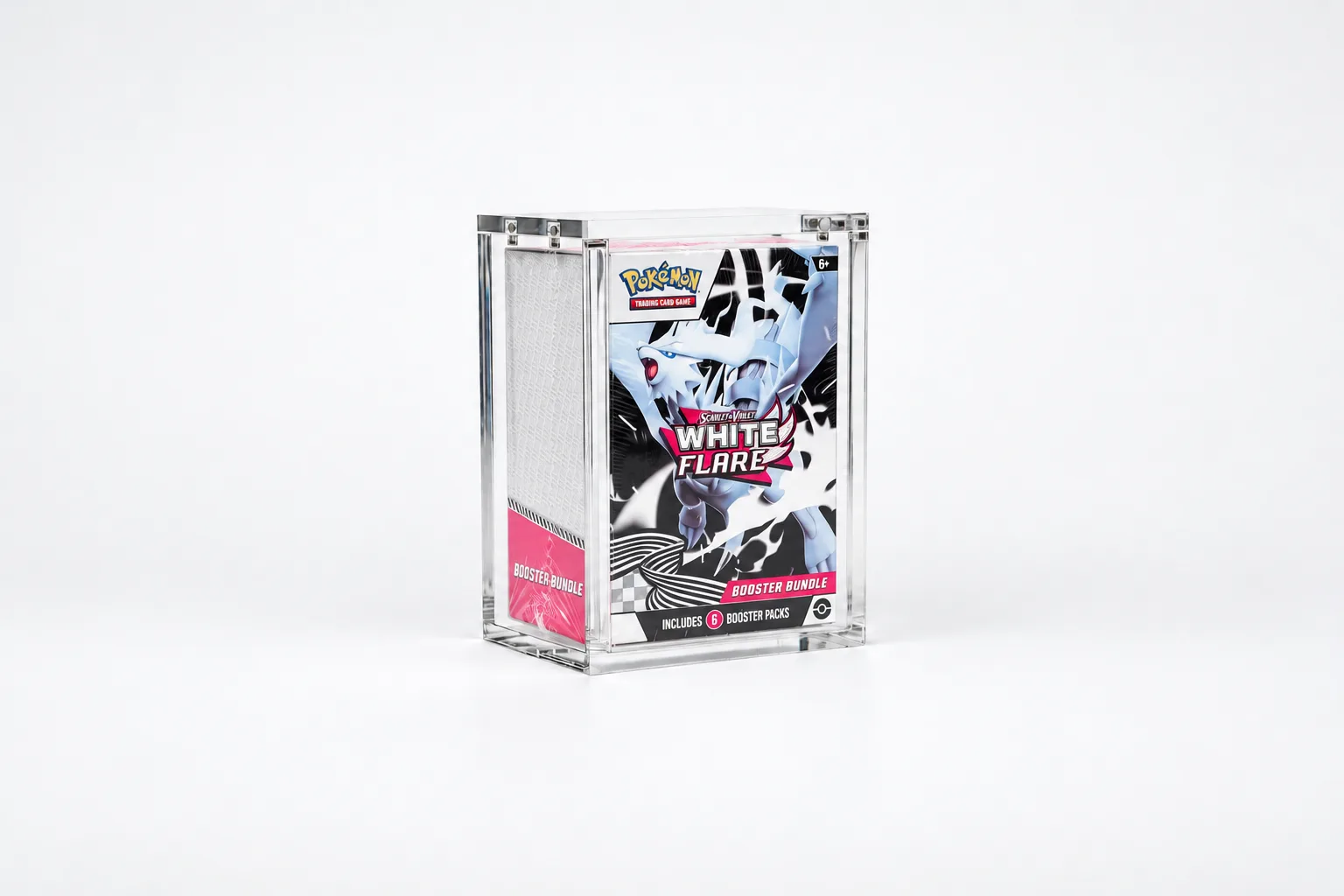
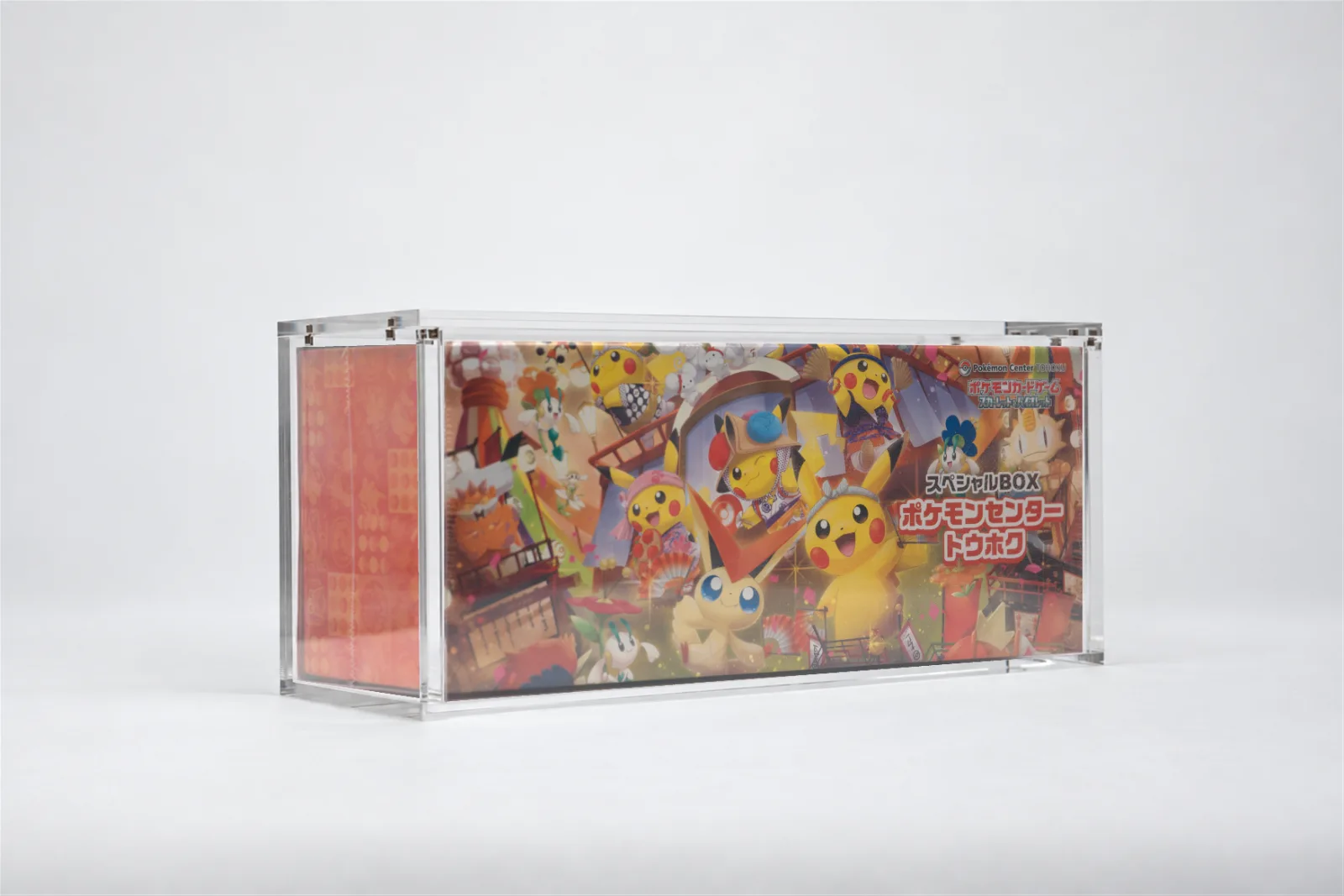
Collectibles you want to see go on a shelf instead of in a cupboard, which means light, dust and hands. An acrylic case keeps dust and fingers off your collectible and protects the seal from small tears. Our acrylic is also treated with an agent that blocks 96% of UV. Visible light and heat it doesn't stop; more on that in Do acrylic cases protect Pokémon from UV and fading?
For the international Booster Box of 36 booster packs there's the Booster Box Case, 140 x 79 x 126 mm inside.
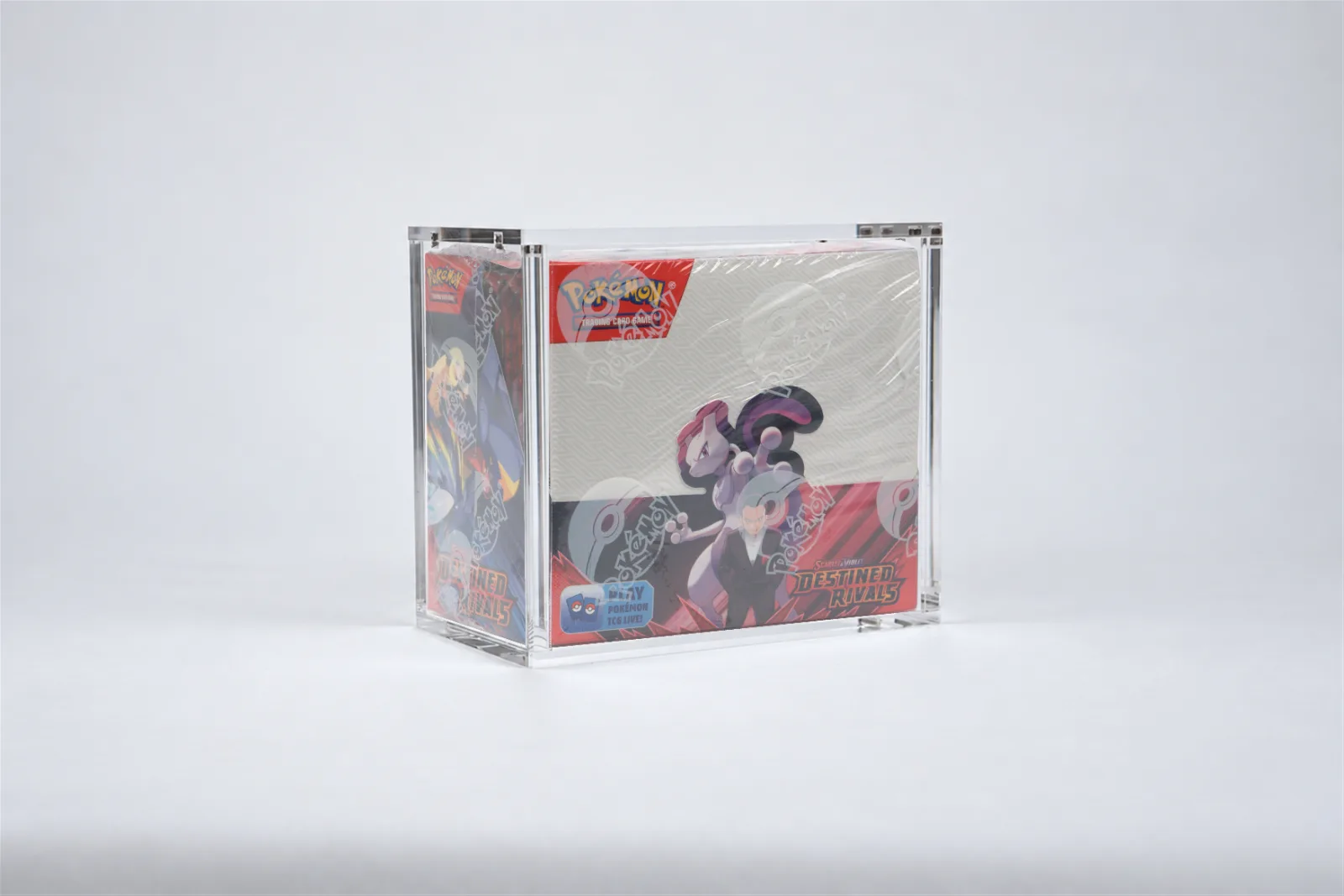
Booster Box Case
€11.99In stock
Frequently asked questions
Are plastic storage tubs safe for sealed Pokémon?
Yes, as long as the collectibles are dry when they go in and the tub isn't against a cold outside wall, on a cold floor or in the sun. A closed tub keeps dust out, and an opaque one keeps light out too, but it also holds in any moisture that's already there. Pack on a dry day, and if in doubt, put a hygrometer in the tub.
Should I take the seal off when I store sealed product long term?
No. The seal belongs to a sealed product; without it, it isn't sealed any more. Don't stick anything on it, and leave a small tear as it is.
Is the loft or the basement a good place for sealed product?
No. A loft gets very hot in summer, and very dry as a result. A basement is often damp. A closed cupboard in a living room or bedroom, away from outside walls, is almost always better.
What humidity should I store Pokémon at?
NEDCC recommends 30 to 60% relative humidity for paper in a space people also use. The damper it gets, the sooner mould appears: the CCI gives roughly 100 days at 70% and two days at 90%. Measure it with a hygrometer, because you can hardly feel it.
What's the best way to store Pokémon cards?
Loose cards go in a sleeve, and the better ones into a toploader as well. Keep binders standing upright in a cupboard rather than flat under a pile. Beyond that, the same rules as for sealed product apply: out of the light, at room temperature, dry and away from outside walls. For slabs we have separate guides on scratches and sunlight.